
Furnace Repair in Loveland, CO
Furnace Repair finds out why your furnace stopped heating, fixes the part that failed and gets warm air moving through your home again, with the full price explained before any work begins. Available 24/7 for emergencies, with same-day appointments whenever possible, from background-checked, drug-tested technicians.
When You Need Furnace Repair

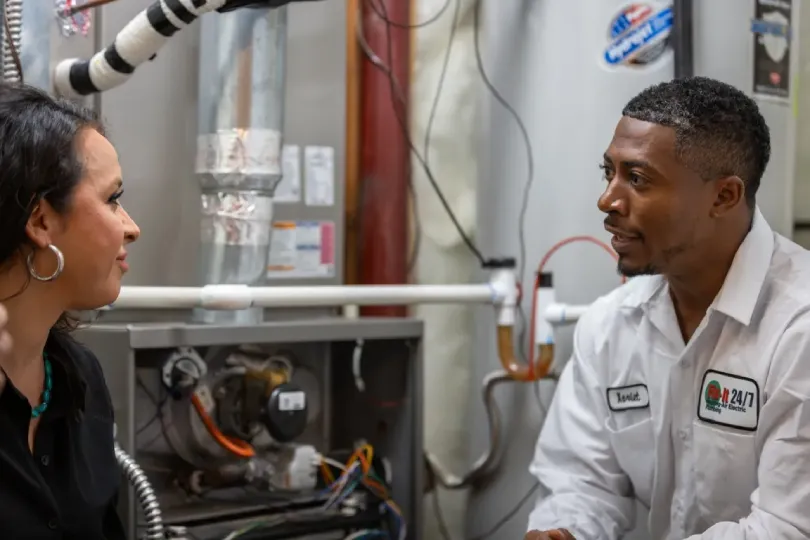
Furnace Repair is the diagnosis and fix of a gas furnace that isn't heating the way it should. You need it when the furnace won't start, blows cool air, shuts off before the house warms up, cycles on and off every few minutes, or makes a sound it didn't make last week. In Loveland, a furnace may run for hours on a cold night, then sit idle through a sunny afternoon, and those long runs and frequent restarts are where worn parts show themselves.
Most furnace problems give some warning, and catching them early means a smaller repair. Our job is to find the real cause, explain it in plain English and let you decide what to do next. It's one part of our full range of Heating Services.








What Our Furnace Repair Covers
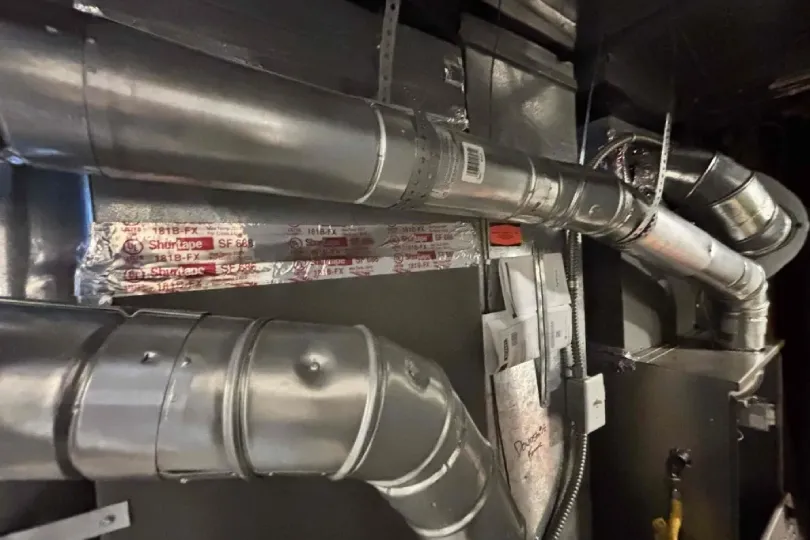
We diagnose and repair the parts that most often stop a furnace from heating:
- Flame sensors coated with residue, which shut the burners off seconds after lighting
- Igniters that crack or wear out
- Inducer motors and pressure switches that keep the furnace from starting
- Limit switches that trip when restricted airflow overheats the furnace
- Blower motors and capacitors
- Control boards, gas valves and thermostat wiring
- Clogged or frozen condensate lines on high-efficiency furnaces
- Vent pipes blocked by snow, frost or debris
Why Fixing the Cause Matters
Many repeat furnace calls come from repairs that fixed the symptom but not the reason. Replace a limit switch without asking why the furnace overheated, and the new switch trips just like the old one. Usually the answer is airflow: a clogged filter, a dirty blower wheel or a blocked return. We follow the problem back to what started it.
High-efficiency furnaces add a winter wrinkle. Their plastic vent pipes often exit through a side wall close to the ground, where drifting snow or frost can block them. The pressure switch then stops the furnace for safety. Clearing the pipe may fix it, but it's worth knowing why it happened so it doesn't repeat every storm.
Safety is the other reason to fix things properly. A furnace that burns poorly can produce carbon monoxide, which you can't see or smell. The EPA explains why carbon monoxide matters indoors and why working alarms belong in every home with gas appliances.
Services We Offer




What Happens During a Furnace Repair Visit
- You call or book online and get a service window of about four hours. If we can't arrive the same day, we waive the diagnostic fee.
- Your technician calls ahead, arrives in shoe covers and puts down drop cloths.
- They ask what you've noticed, including sounds and any thermostat codes.
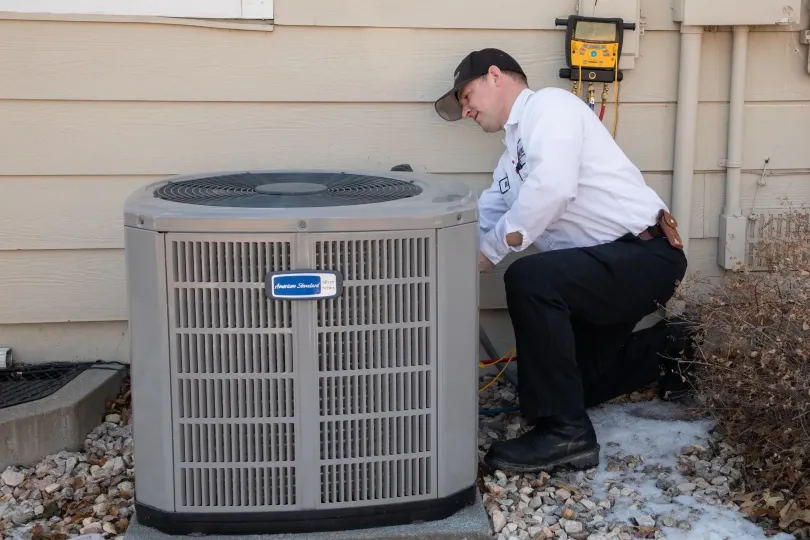
- They run a full heating cycle and test ignition, airflow, gas pressure and safety controls to pinpoint the failed part.
- You get a plain explanation, your options and upfront pricing. Nothing happens until you approve it.
- They make the repair, confirm the furnace heats properly and walk you through what they did.
What Affects the Cost of Furnace Repair
The cost depends on what's actually wrong, so we price it after the diagnosis. The main factors:
- The failed part, since a flame sensor is a different job from a blower motor or control board
- The type of furnace, standard or high-efficiency, and its age
- Whether the part is on the truck or needs to be ordered
- How easy the furnace is to reach
- Whether related problems, like a frozen condensate line, need attention too
You'll see the full price before any work begins. For a big repair, we also offer a Free Second Opinion.
Why Homeowners Choose Fix-it 24/7 for Furnace Repair
Fix-it 24/7 was founded in Colorado in 2013 by a former tradesman who built the company around prevention. Our background-checked, drug-tested technicians complete over 100 hours of training each year.
After a repair, the best next step is regular care. A yearly Furnace Deep Clean and Tune-Up keeps the blower wheel, burners and flame sensor clean, and the Green Club Maintenance Membership adds priority scheduling and member savings on repairs.
Frequently asked questions
Have questions? We've got answers. Browse the frequently asked questions below to learn more about our heating services, what to expect during your appointment, and how Fix-it 24/7 can help keep your home warm, comfortable, and running efficiently all season long.
Yes, if you have a high-efficiency furnace with plastic vent pipes that exit through a side wall. Drifting snow or frost can block those pipes, and the furnace's pressure switch will shut it down for safety. After a storm, check that the pipes outside are clear, without damaging them. If the furnace still won't run, or the problem keeps coming back, Furnace Repair can confirm the cause and check whether the vent pipes are positioned well for winter.
Repair usually makes sense when the furnace is younger, the problem is a single part and the system has been reliable. Replacement deserves a look when the furnace is near the end of its expected life, repairs are becoming regular or a major part like the heat exchanger has failed. If it's close, your technician will lay out both options with upfront pricing, including what Furnace Installation would involve.
To fix a furnace that won't heat properly, we perform a comprehensive diagnostic assessment to identify the root cause. Depending on the issue, solutions may include ignition system repairs, gas valve replacement, heat exchanger cleaning, filter replacement, or thermostat calibration. Each repair approach is customized to your specific system problem.
Whether it's worth fixing your furnace depends on factors such as the unit's age, repair costs compared to replacement, efficiency, and repair history. Generally, if your unit is under 12 years old and the repair cost is less than 30% of a new system, repair is often economical. Our technicians provide honest assessments to help you make the best financial decision.
We're available 24/7 for heating emergencies, and we offer same-day Furnace Repair whenever possible. When the schedule doesn't allow a same-day visit, we waive the diagnostic fee. You'll still get a four-hour service window and a call when your technician is on the way, so you can plan your day around it.
Short cycling usually comes from one of three things: a flame sensor too dirty to confirm the flame, a furnace overheating because of restricted airflow, or a thermostat placed where it heats up quickly. Overheating is often tied to a clogged filter or a dusty blower wheel. Short cycling wears parts faster and wastes fuel, so it's worth fixing even if the house still feels warm. During Furnace Repair, the technician watches a full heating cycle to see exactly where it stops.
A furnace that blows cold air usually has a blower running while the burners aren't lit. Common causes are a dirty flame sensor, a worn igniter, a tripped limit switch or, on high-efficiency furnaces, a blocked vent pipe or clogged condensate drain that stops the burners from firing. Also check that the thermostat fan is set to "auto," not "on," which moves unheated air between cycles. If that checks out, Furnace Repair can find which part is keeping the burners from staying lit.
Your furnace may be running without heating effectively due to ignition system problems, dirty filters, faulty gas valves, heat exchanger issues, or thermostat malfunctions. Our technicians can quickly diagnose the specific cause and recommend the appropriate repair solution.
Get Your Furnace Running Again
Schedule your Furnace Repair in Loveland today, with upfront pricing, a clear explanation and no pressure.