
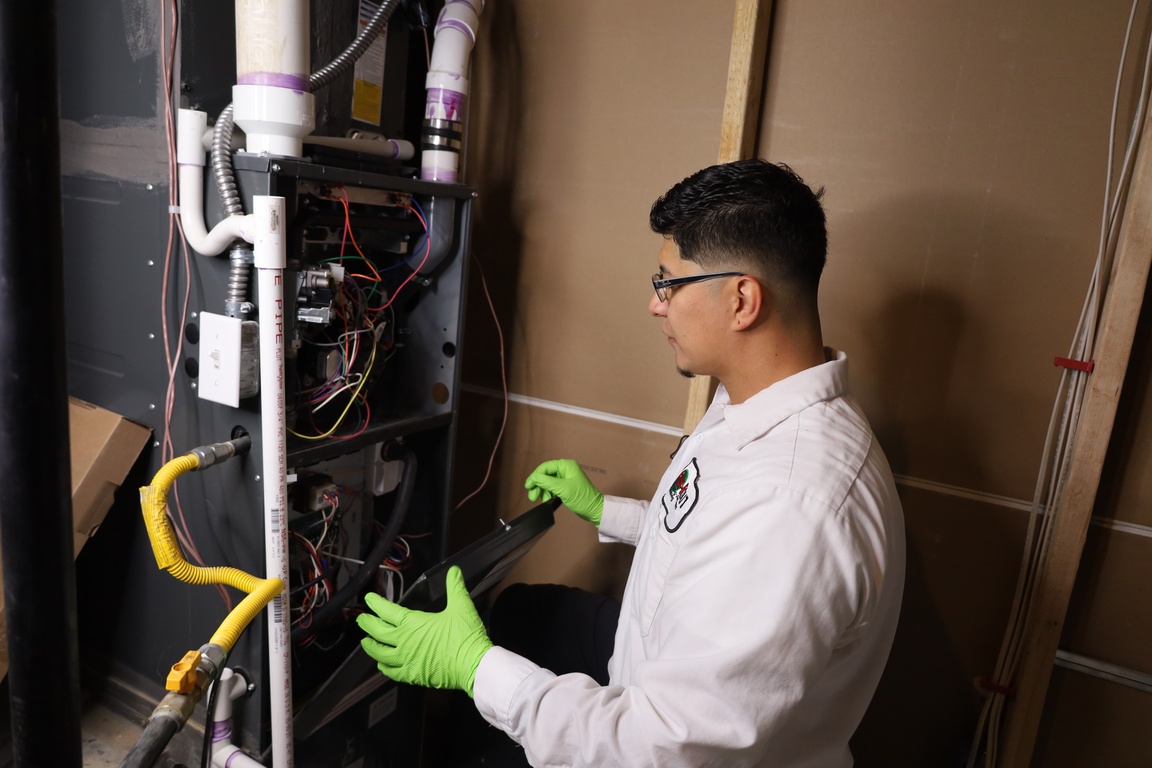
A furnace problem can increase your heating bill by making the system run longer, cycle more often, or work harder to keep your home comfortable. Dirty components, airflow restrictions, thermostat problems, and worn furnace parts can all contribute. If your heating costs rise unexpectedly without a major change in weather or thermostat settings, your furnace may need attention.
For homeowners across the Denver Metro area, addressing those warning signs early can help protect comfort, efficiency, and reliability during Colorado’s heating season.
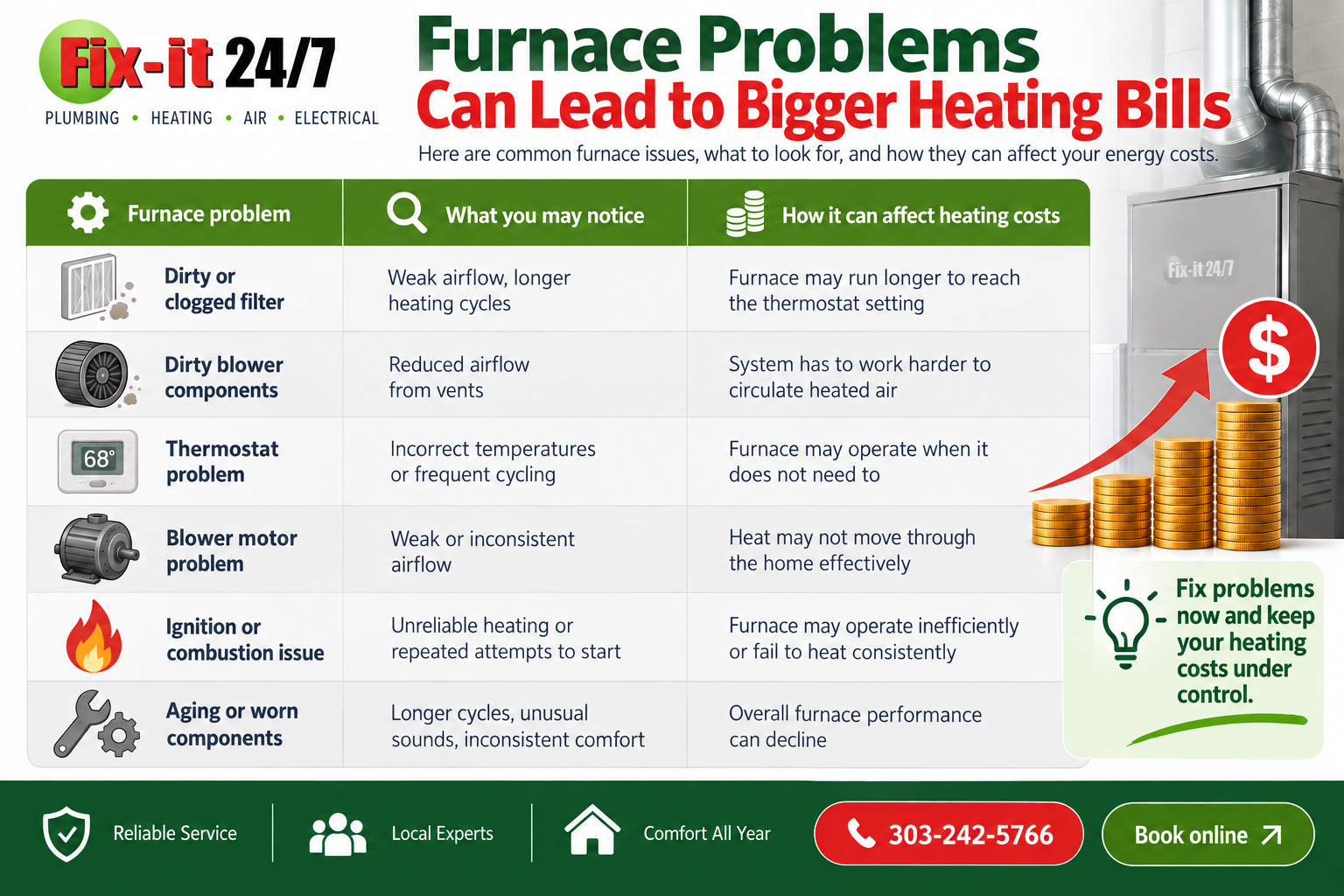
A furnace uses more energy when it cannot produce or distribute heat efficiently. The underlying problem may be relatively simple, such as restricted airflow, or it may involve a component that requires professional furnace repair.
Watch for these common connections between furnace performance and energy use:
What Furnace Problems Commonly Reduce Heating Efficiency?
Several furnace problems can make a noticeable difference in how effectively your home is heated.
Your furnace needs adequate airflow to distribute heat throughout the home. A clogged filter or buildup of dirt, dust, and debris on furnace components can restrict that airflow.
When less heated air reaches your rooms, the furnace may need to operate longer to satisfy the thermostat. Fix-it 24/7’s preventative-care approach places particular emphasis on removing dirt, dust, and debris and thoroughly cleaning heating equipment rather than simply waiting for a breakdown.
Homeowners can check the furnace filter and replace it when appropriate. Problems involving internal furnace components should be handled by a qualified technician.
The blower is responsible for moving heated air through your ductwork. When dirt accumulates on the blower wheel, airflow and system performance can suffer.
This is one reason Fix-it 24/7’s furnace maintenance focuses on a Deep Clean and Tune-Up that includes removing and cleaning the blower wheel. The goal of preventative care is to help the furnace operate reliably and efficiently before small problems turn into breakdowns.
Sometimes the furnace itself is not the only issue. A malfunctioning thermostat can cause the heating system to cycle incorrectly or continue operating longer than necessary.
Before scheduling service, make sure the thermostat is set to the intended temperature and heating mode. If the furnace continues behaving unexpectedly, professional diagnosis can determine whether the thermostat, furnace, or another part of the heating system is responsible.
Ignition components, blower motors, controls, and other furnace parts can develop problems over time. Depending on the failure, your furnace may struggle to start, run inconsistently, or have difficulty maintaining the temperature you set.
If you notice these symptoms along with rising heating costs, scheduling furnace repair in the Denver Metro area can help identify the actual cause rather than guessing or replacing parts unnecessarily. Fix-it 24/7 provides furnace repair as well as same-day and emergency service in the Denver area.
Look for a change in your energy bill and a change in how your furnace operates. The combination is more useful than the bill alone.
Signs worth investigating include:
Denver-area temperatures can change significantly during the heating season, so weather should always be considered when comparing bills. If your furnace is running noticeably differently even after accounting for colder conditions, a service visit can help determine why.
Homeowners can safely check a few basic items before scheduling service. More complicated furnace troubleshooting—particularly work involving gas, combustion, electrical components, or internal safety controls—should be left to a qualified professional.
Start by checking:
Do not remove furnace safety panels or attempt DIY repairs involving gas lines, burners, electrical wiring, or combustion components.
Emergency furnace repair is appropriate when a heating problem creates a potential safety concern or leaves your home without dependable heat during dangerously cold conditions.
If you smell gas, leave the area and follow the instructions of your gas utility or emergency authorities rather than trying to diagnose the furnace yourself. Carbon monoxide alarms should also be treated seriously.
A complete loss of heat during severe winter weather can also require urgent service, especially when freezing indoor conditions could put occupants or plumbing at risk.
Fix-it 24/7 provides emergency furnace service throughout Denver and the surrounding Metro area when homeowners need fast heating help.
Preventative furnace maintenance can help your system operate as intended by addressing dirt and wear before they contribute to performance problems. It can also give a technician an opportunity to identify developing issues before they become an unexpected repair.
Fix-it 24/7’s brand philosophy is built around prevention: protect equipment where possible, then respond quickly and transparently when something does break.
Its heating Deep Clean and Tune-Up includes detailed cleaning and service of accessible furnace components, including removal and cleaning of the blower wheel.
That preventative approach is especially useful before a Denver winter puts the furnace under sustained demand. Maintenance cannot prevent every breakdown, but keeping equipment clean and properly serviced can support efficiency, reliability, and system life.
Replacement may be worth considering when an older furnace needs increasingly frequent repairs, has major component problems, or no longer provides the comfort and performance you expect.
There is no single age or repair cost that automatically means every furnace should be replaced. The better decision depends on the furnace’s condition, repair needs, overall performance, and the homeowner’s priorities.
If repair no longer makes practical sense, a professional can explain your options for furnace installation so you can compare repairing the existing equipment with investing in a new heating system. The important part is understanding both options before making the decision.
Yes, a dirty filter can restrict airflow and make it harder for your heating system to move warm air through the home. Check the filter regularly and replace it according to the furnace and filter manufacturer’s recommendations.
Colder outdoor temperatures can increase heating use even when your thermostat stays at the same setting. If the higher bill is accompanied by longer furnace cycles, poor airflow, uneven heating, unusual noises, or other performance changes, the furnace may need professional attention.
Furnace repair may reduce unnecessary energy use when a malfunction is causing the system to operate inefficiently. The result depends on what caused the higher bill, so the first step is correctly diagnosing the furnace rather than assuming a specific repair will produce a certain amount of savings.
Repair is generally appropriate when the furnace has a specific malfunction, such as failing to heat, cycling incorrectly, producing weak airflow, or making abnormal noises. Preventative maintenance is designed to clean and care for a working system, identify developing problems, and help maintain reliable performance.
A complete loss of heat may require emergency furnace repair when outdoor conditions are dangerously cold or the situation threatens the safety of occupants or the home. Gas odors and carbon monoxide alarms require immediate safety action rather than ordinary furnace troubleshooting.
If your furnace is running longer, struggling to keep your Denver-area home comfortable, or showing other signs of trouble, schedule furnace repair with Fix-it 24/7. A professional diagnosis can identify what is affecting your heating system and give you clear options for restoring reliable, efficient comfort.