
Does Drano Damage Pipes? How Often You Should Use Drano
Chemical drain cleaners like Drano can sometimes be used safely as directed, but repeated use, standing water, older pipes, and recurring clogs can create problems. This guide explains when to skip chemical cleaners, what to try first, how to use them more safely, and when a Denver homeowner should call a plumber instead.

Does Drano damage pipes? It can, and repeat use is where the damage happens. Its maker says the products are safe for plastic and metal pipes when used as directed, but Fix-it 24/7 recommends avoiding chemical drain cleaners, especially in older Denver homes. If the same drain needs one again within a few months, the clog is coming back for a reason chemicals won't fix.
Does Drano Damage Pipes?
It can, mostly through repeat or careless use. The manufacturer's position is different. SC Johnson says all Drano products can be used safely with plastic or metal pipes when used as the label directs.
Plumbers still see problems, and Fix-it 24/7 recommends avoiding chemical drain cleaners, which can damage older pipes in many Denver homes. So is Drano bad for pipes? The damage usually comes from how the product gets used:
- Repeat doses. Pouring a second and third bottle into a drain that won't clear leaves a concentrated chemical sitting in the pipe.
- A fully blocked drain. If the water isn't moving at all, the cleaner can't reach the clog and pools on top of it.
- Older pipes. Some older Denver homes still have galvanized steel or cast iron drain lines. Corroded pipe and weak joints are where trouble shows up first.
- Mixing products. Adding a second cleaner, or bleach, on top of the first can cause a dangerous reaction.
How Often Should You Use Drano?
As rarely as possible. The manufacturer gives no limit on how often to use its clog removers. A practical rule of thumb from the plumbing side: once, after a plunger and a clean stopper haven't worked, is the most a drain should need. Needing it again within a few months means something is building up or catching in the line.
Drano does recommend its enzyme-based Build-Up Remover once a month for drain maintenance, including in homes on septic systems. That's a different product from the gel and liquid clog removers most people buy.
When Is It Safe to Use Drano, and When Should You Skip It?
A drain cleaner is only worth trying on a single slow sink or tub, after a plunger and a clean stopper haven't worked. Skip it for toilets, standing water, repeat clogs and several slow drains at once.
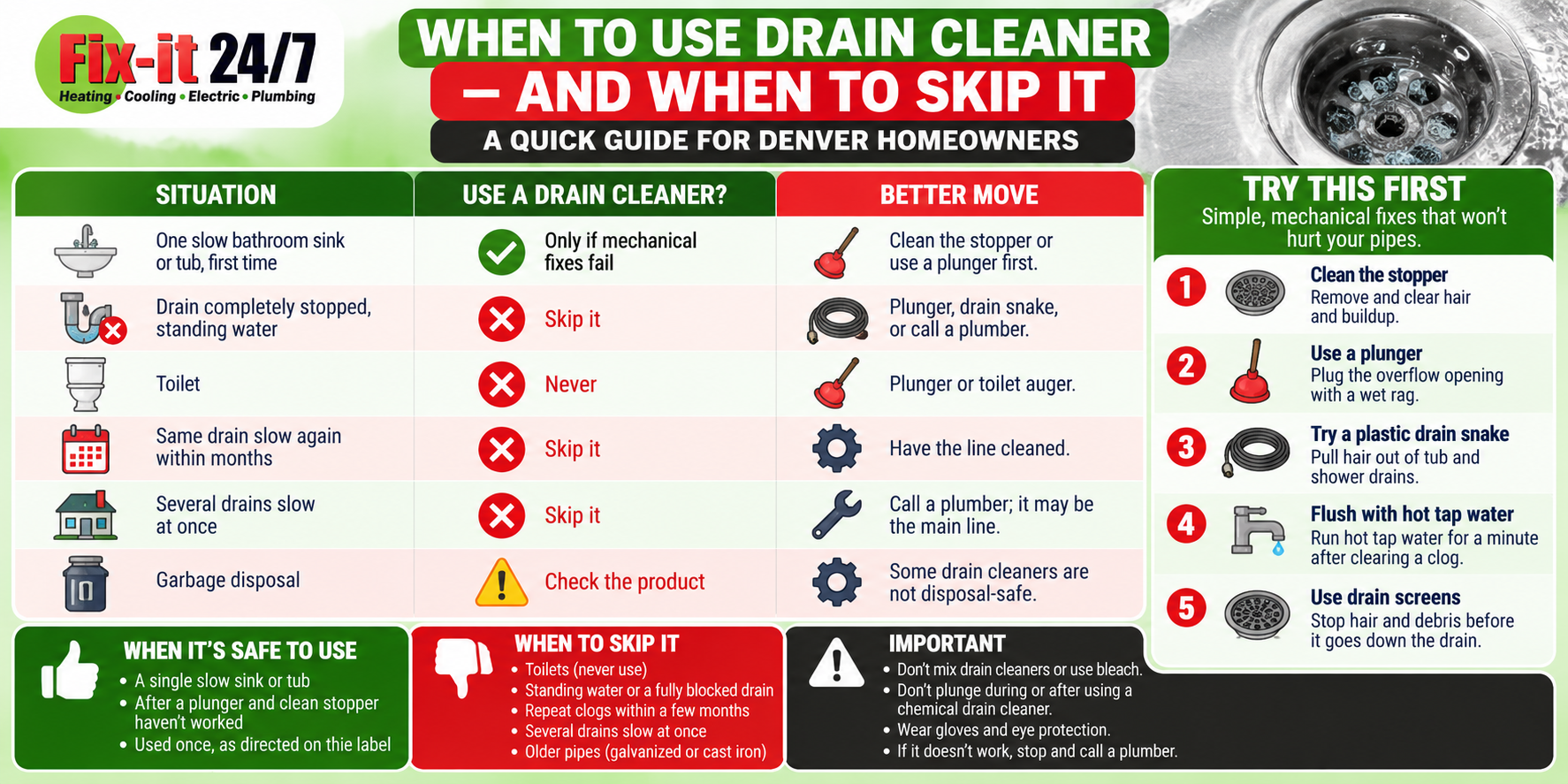
Drano says its clog removers should not be used in toilets, and that its crystal clog remover is not safe in garbage disposals.
What Should You Try Before Reaching for Drano?
Start with the simple, mechanical fixes. They're often faster, and they can't hurt your pipes:
- Clean the stopper. In a bathroom sink, pull the pop-up stopper and clear the hair wrapped around it. This alone fixes a lot of slow sinks.
- Use a plunger. A cup plunger on a sink or tub works well. Plug the overflow opening with a wet rag so the pressure goes down the drain.
- Try a plastic drain snake. These inexpensive barbed strips pull hair out of tub and shower drains.
- Flush with hot tap water. Run hot tap water for a minute after clearing a clog. Don't pour boiling water into plastic pipes.
- Use drain screens. A screen over the tub and shower drain stops most hair before it gets in.
If you've already used a chemical drain cleaner, don't plunge afterward. The Drano label warns never to use a plunger during or after use, because it can splash the chemical back at you.
Can You Use Drano in a Kitchen Sink or Garbage Disposal?
Sometimes, but kitchen clogs are usually grease, and grease tends to come back. Drano's gel label says that if the drain doesn't clear, don't turn on the disposal, because the chemical can splash back out.
The better habit is prevention. Wipe greasy pans with a paper towel before washing them, put cooled cooking grease in the trash, and run cold water while the disposal is on. A kitchen drain that clogs again and again usually has grease built up along the pipe walls, and a full drain cleaning is what removes it.
What Should You Do If Drano Doesn't Work?
Stop and call a plumber. Don't add a second bottle, and don't switch to a different product. Mixing drain cleaners or adding other chemicals can produce hazardous fumes or a violent reaction.
When you call, tell the plumber which product you used and how much. That helps the technician protect themselves and choose the right way to clear the line. A plumber can use a drain cable or water jetting to clear the clog completely, rather than opening a small channel through it.
How Do You Use a Drain Cleaner Safely?
If you do use one, treat it as the strong chemical it is. Poison Control notes that drain cleaners contain strong alkalis or acids that can burn skin and eyes, and that splash-back is common. A few precautions:
- Wear rubber gloves and eye protection.
- Pour slowly, close to the drain opening, with the room ventilated.
- Keep it in its original container, out of children's reach.
- Follow the label's wait time, then flush with hot tap water.
If it gets on skin or in eyes, rinse with plenty of water and contact Poison Control right away.
Frequently Asked Questions
Can you use Drano in a toilet?
No. Drano says its clog removers should not be used in toilets. Use a flange plunger or a toilet auger instead, or call a plumber if those don't work.
Is Drano safe for PVC pipes?
The manufacturer says its products can be used with plastic pipes when used as directed. Problems are more likely with repeat doses, a fully blocked drain, or pouring very hot water afterward.
How long can Drano sit in a drain?
Follow the label. Drano's gel directions say to wait about 15 minutes, or 30 for a tough clog, then flush with hot tap water. Don't leave it sitting in a drain that won't clear.
Is Drano a base or an acid?
Most Drano clog removers are alkaline, the type of cleaner Poison Control describes as caustic. SC Johnson warns against acid drain cleaners at home and says they should be a last resort, used only by a professional. That difference is one more reason never to mix products in a drain.
Why does my drain keep clogging?
Recurring clogs usually mean buildup further down the line, a pipe that has sagged or corroded, or roots in the sewer line. A drain cleaning that clears the full pipe, not a chemical, is the lasting fix.
Drain Still Slow After Trying Everything?
If a drain keeps clogging, Fix-it 24/7 plumbers can clear it the whole way through and find out why it keeps happening. Schedule drain cleaning online, see our sink and faucet repair services, or call 303-214-0277. If several drains are slow at once, ask about sewer line service.
Save on Your Next Home Service
Keeping your home comfortable and running smoothly shouldn’t have to stretch your budget. Explore current specials from Magnolia Heating, Cooling & Plumbing and save on select heating, cooling, plumbing, and indoor air quality services. Check out our latest offers and schedule your service today.