
Boiler maintenance is one of the best ways to reduce the risk of losing heat when Denver temperatures drop. Boiler maintenance means routine professional care that keeps the system operating as it should, including cleaning components, removing buildup, restoring proper operation, and ensuring connections are secure and functioning properly. It also includes making necessary adjustments and addressing wear or developing issues before they interfere with reliable heating. The biggest mistakes are often simple: waiting until winter to schedule service, ignoring small leaks or unusual noises, and attempting boiler work that should be handled by a qualified professional.
Denver’s cold winters put heating systems under sustained demand, so preparing your boiler before peak heating season can help you catch developing problems early and keep the system operating reliably.
Here are nine boiler maintenance mistakes to avoid, followed by a practical winter checklist for Denver homeowners.
The best time for preventative boiler maintenance is before you depend on the system every day.
Scheduling professional maintenance ahead of peak heating season allows a technician to clean components, remove buildup, restore proper operation, ensure connections are working as they should, and address leaks, pressure problems, or worn components before your boiler is working its hardest.
For Denver homeowners, late summer or early fall is a practical time to schedule boiler maintenance and service. Waiting until the first major cold spell can mean discovering a problem precisely when you need reliable heat the most.
Think of maintenance as preparation rather than a response to something going wrong. Taking care of your boiler before winter can help improve reliability and give you a clearer picture of its condition.
A boiler can still heat your home while developing a problem.
Changes in pressure, unusual sounds, small leaks, inconsistent heating, frequent cycling, or radiators that do not heat properly can all signal that your system needs attention.
Pay attention to changes in how the boiler operates rather than using “the house is still warm” as your only test.
Watch for warning signs such as:
· Water around the boiler or nearby piping
· New banging, rattling, whistling, or other unusual noises
· Rooms or radiators heating unevenly
· Boiler pressure that repeatedly changes or drops
· Frequent boiler shutdowns
· Difficulty maintaining the thermostat setting
· No heat or hot water
Not every change means your boiler needs a major repair. However, persistent changes are worth investigating before they turn into a winter breakdown.
There are useful things homeowners can monitor, but a boiler—especially a fuel-burning boiler—is not a good place for experimental repairs.
Professional boiler maintenance can involve cleaning components, removing buildup, restoring proper operation, ensuring connections are secure and working as they should, addressing wear, and making appropriate adjustments.
Homeowners can safely monitor the system for leaks, unusual sounds, changes in heating performance, and obvious problems around the equipment.
Work involving combustion, gas connections, electrical components, internal controls, pressure-control devices, venting, or safety components should be left to a qualified professional.
If you are unsure whether a task is safe to perform yourself, stop and have the system serviced rather than risking damage to the boiler or creating a safety concern.
Even a small amount of water around your boiler deserves attention.
Boiler leaks can come from several places, including piping, fittings, valves, seals, or other system components. The source of the leak—not simply the amount of visible water—determines what needs to happen next.
One common mistake is repeatedly wiping up water and assuming the problem is minor because the boiler continues to run.
Instead, monitor where the water appears and arrange professional service if it continues.
Avoid disassembling components or randomly tightening fittings in an attempt to stop a leak. Boiler systems operate under specific conditions, and an incorrect DIY repair can create additional problems.
Addressing a recurring leak before Denver’s coldest weather arrives is much better than discovering that the underlying problem has become worse during peak heating season.
Boiler pressure is an important operating condition in many hot-water boiler systems.
Homeowners can monitor the pressure gauge and compare its readings with the operating guidance provided by the boiler manufacturer. What you should not do is assume there is one correct pressure setting for every boiler.
A bigger warning sign is pressure that repeatedly changes or drops.
Continually adding water without determining why the boiler is losing pressure can mask an underlying problem instead of solving it.
If your boiler’s pressure repeatedly falls, rises unexpectedly, or moves outside the manufacturer’s recommended range, have a qualified technician diagnose the cause.
Your boiler is only one part of the system that keeps your home comfortable.
Hot-water boiler systems may rely on piping, pumps, controls, radiators, baseboards, or other components to distribute heat throughout the house. A boiler can appear to be running normally while one area of the home remains uncomfortable.
Watch for symptoms such as:
· One radiator staying cold
· Some rooms heating much more slowly than others
· Persistent water or air noises
· Uneven temperatures throughout the house
· Heat that does not seem to reach certain areas
Some hydronic heating systems may also require air to be removed from radiators. Whether that is appropriate and how it should be done depends on the specific system.
If you are unsure, have a professional restore proper system operation rather than opening valves or adjusting components without knowing their function.
Effective boiler maintenance should consider how the complete heating system is performing—not just whether the boiler turns on.
For fuel-burning boilers, maintenance involves safety as well as comfort.
Combustion venting and flues need to function properly. A qualified professional can remove blockages or buildup, address corrosion, secure disconnected sections, and ensure venting is functioning as it should.
Homeowners should never modify boiler venting, gas connections, combustion components, or safety controls themselves.
Carbon monoxide alarms are another important part of home heating safety. Homes with fuel-burning appliances should have properly placed carbon monoxide alarms and homeowners should test and maintain them according to the alarm manufacturer’s instructions.
If a carbon monoxide alarm sounds, treat it as a safety issue rather than trying to diagnose your boiler first. Follow the alarm manufacturer’s emergency instructions and move to fresh air as directed.
Preventative maintenance cannot guarantee that a boiler will never break down. It can, however, allow a technician to clean and restore components, remove buildup, ensure connections are working properly, and address developing problems before the system faces peak winter demand.
That is especially valuable in the Denver Metro area, where your boiler may have to work hard for extended periods during cold weather.
Instead of waiting until there is no heat, pay attention to changes such as:
· Increasingly frequent cycling
· Persistent noises
· Recurring pressure loss
· Water leaks
· Uneven heating
· Unexplained changes in performance
The goal is not to assume that every unusual noise means an expensive repair. It is to recognize when something has changed and find out why.
Preventative care should help you understand your system better, protect your heating equipment, and know your options before a problem becomes an emergency.
Maintenance can help protect your boiler, but it cannot reverse every age-related or equipment-related problem.
If your system needs increasingly frequent repairs, has persistent reliability issues, or no longer heats your home effectively, ask a professional to explain the condition of the equipment and your available options.
Repair may still make sense. In other situations, discussing replacement may be appropriate.
The important thing is to make the decision based on the condition and performance of your particular system rather than automatically assuming that an older boiler needs to be replaced.
If a larger heating project becomes necessary, homeowners can review available heating financing options. It can also be helpful to check Fix-it 24/7’s current home service specials and offers, since available promotions can change.
A professional recommendation should help you understand what is happening, why a repair or replacement is being recommended, and what options are available for your home.
A simple checklist can make it easier to prepare your heating system before Denver’s winter weather arrives.
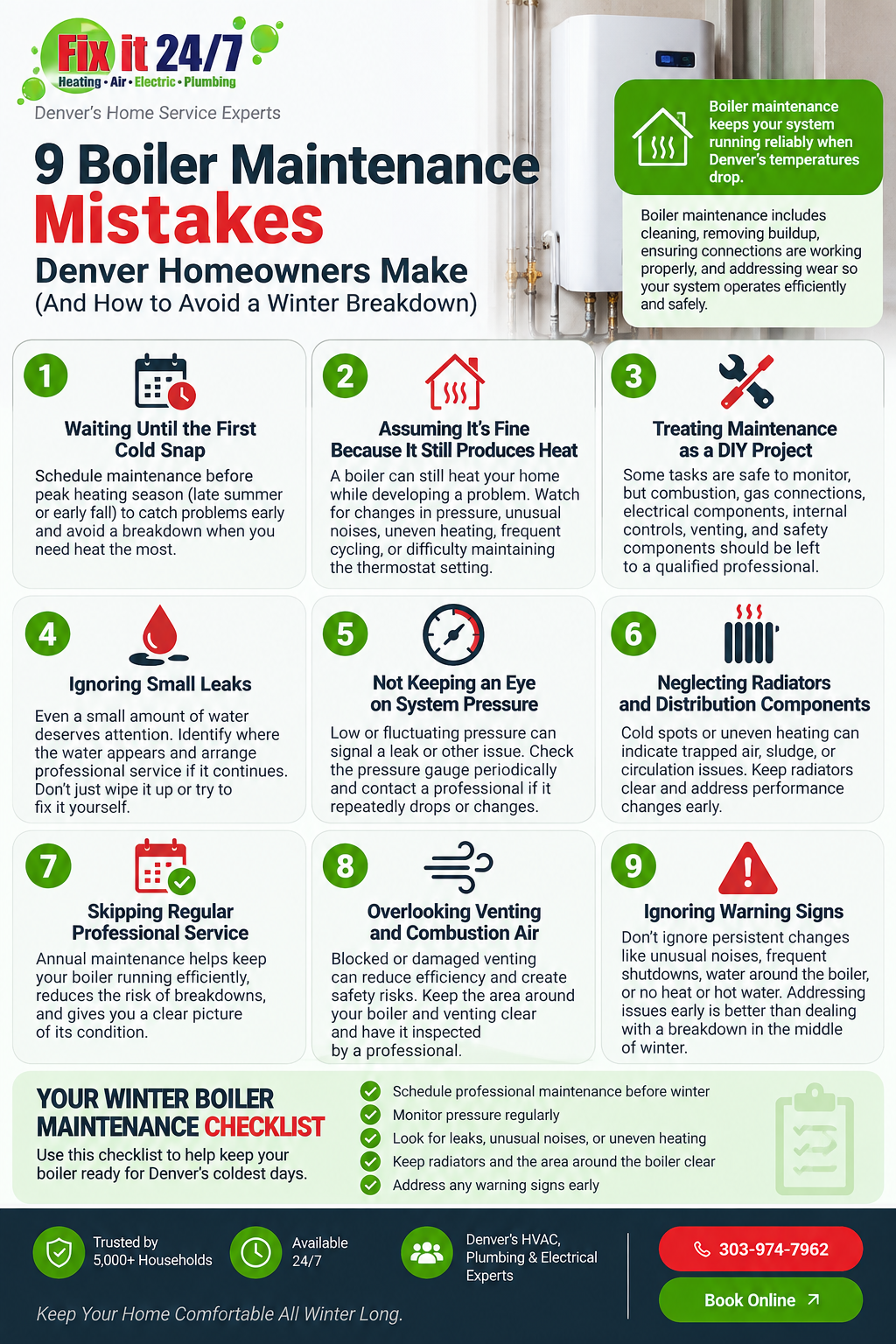
Homeowner boiler maintenance should focus primarily on observation and basic upkeep, not internal repairs.
You can:
· Look for visible water or leaks
· Listen for unusual noises
· Monitor pressure according to your boiler manufacturer’s guidance
· Pay attention to uneven heating
· Keep the area around the equipment accessible
· Maintain carbon monoxide alarms according to their instructions
· Note error codes or changes in system behavior to share with your technician
You should call a qualified professional for work involving:
· Gas or fuel connections
· Combustion components
· Electrical components
· Boiler venting
· Internal controls
· Safety devices
· Recurring pressure problems
· Persistent leaks
· Repairs requiring the boiler to be opened or disassembled
The purpose of preventative maintenance is to make your heating system more dependable—not create a new problem while attempting a DIY repair.
Annual professional boiler maintenance before heating season is a practical schedule for most homes.
For Denver homeowners, scheduling before the coldest weather arrives gives you time to address potential problems before your boiler is under sustained winter demand.
However, annual maintenance should not be treated as the only time your boiler can receive attention.
If you notice a leak, recurring pressure problem, unusual noise, repeated shutdown, uneven heating, or loss of heat, schedule service when the problem appears rather than waiting for your next annual maintenance appointment.
If you find yourself searching for “boiler maintenance near me” because something about your heating system has changed, that change itself may be a good reason to have the boiler serviced.
Annual professional boiler maintenance before heating season is a good general schedule. Regular maintenance gives a technician an opportunity to clean and restore system components, remove buildup, ensure connections are working properly, address developing problems, and prepare the boiler for periods of heavier winter use.
Professional boiler maintenance can include cleaning components, removing buildup, restoring proper operation, ensuring connections are secure and working as they should, addressing wear, and making appropriate adjustments. The exact maintenance required depends on the boiler type, system design, condition, and manufacturer recommendations.
Homeowners can perform basic monitoring, but internal boiler maintenance and repairs should generally be handled by qualified professionals. You can watch for leaks, unusual noises, pressure changes, and uneven heating, but fuel, combustion, electrical, venting, internal control, and safety-related work should not be treated as DIY maintenance.
Leaks, recurring pressure problems, unusual noises, repeated shutdowns, loss of heat, and radiators or rooms that do not heat properly are common reasons to schedule boiler service. A persistent change in the way your boiler operates deserves attention even when the system is still producing heat.
Your winter checklist should include scheduling professional maintenance, looking for leaks, listening for unusual noises, monitoring pressure according to manufacturer guidance, addressing uneven heating, and maintaining your carbon monoxide alarms. Address persistent problems before peak winter demand rather than waiting for a complete breakdown.
Don’t wait for the first serious cold snap to discover that your boiler needs attention. Schedule boiler maintenance with Fix-it 24/7 to prepare your heating system for the season and address developing problems before winter puts your boiler to the test.